
If you’ve ever texted a customer from your personal mobile after they called your landline, you’re not alone. Most businesses still juggle a messy mix of communication channels. Landlines for calls. Shared shortcodes for bulk SMS. Staff mobiles for quick follow-ups. It works, until it doesn’t.
A customer calls your office number but tries to reply to your text message from a shared shortcode. The message disappears. Another client saves your technician’s mobile number after a text, then calls it three months later, only to reach someone who left the company last week.
Fragmented communication doesn’t just create confusion. It erodes trust, slows response times, and makes you look smaller than you are. There’s a simpler way: a dedicated business number that handles both voice calls and SMS on the same line.
Here’s why that matters.
The Shared Shortcode Problem
Shared shortcodes, those five- or six-digit numbers like “3456,” are cheap and convenient. They’re often bundled with marketing platforms and work fine for one-way blasts: “Your appointment is tomorrow at 2pm.”
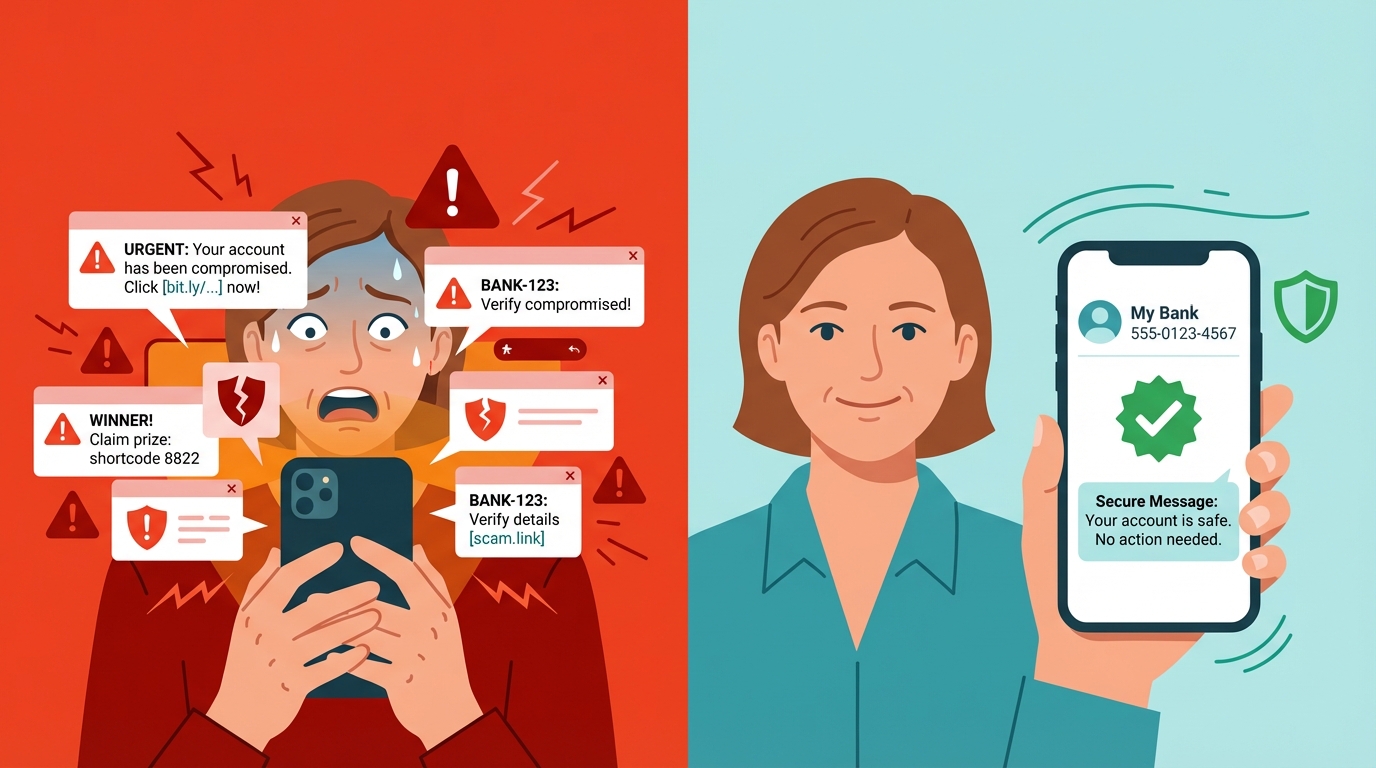
But they come with baggage. Customers see a generic number, not your business name. Over time, they learn to ignore messages from codes they don’t recognise. Worse, you share that shortcode with dozens of other companies. If one of them spams customers or gets flagged, your deliverability can suffer.
Many shortcode setups only handle one-way messaging. Even when replies are enabled, they’re often routed through clunky portals, not your normal workflow. And you still need a separate landline or mobile for calls, creating two separate touchpoints for customers.
The Landline and Mobile Juggle
Plenty of businesses rely on a landline for calls and staff mobiles for SMS. It feels natural, until you try to scale.
Customers often assume they can text your landline. When that fails, they think you’re unresponsive. When an employee leaves, their mobile number walks out the door with them, taking customer relationships along for the ride. There’s no central log of who said what, making compliance and quality control a nightmare. Customers end up with multiple numbers for the same business, creating friction and confusion.
The result? You’re harder to reach than you think, and your customers notice.
What a Dedicated Business Number Actually Is
A dedicated business number is exactly what it sounds like: a phone number that belongs only to your business, capable of both voice calls and two-way SMS.
It can be a local number (09, 03, 021) or a national one. You publish it everywhere—your website, Google Business Profile, email signatures, invoices—and customers can call or text it. Both channels flow into systems you control, whether that’s a cloud phone system, a CRM, or a simple dashboard.
Because it’s yours alone, the number becomes part of your brand identity. Customers save it in their phones. Over time, they recognise it, trust it, and use it.
Dedicated Number vs. Shared Shortcode
The difference comes down to ownership. A shared shortcode is a rented megaphone. A dedicated number is a direct line to your customers.
With a shared shortcode, your reputation is tied to strangers. Your deliverability can tank because someone else misbehaved. Customers see a generic code and assume it’s spam. Replies are often clunky or impossible.
With a dedicated number, you control your own reputation. Customers see a recognisable number and know it’s you. They can reply naturally: “Hey, can I reschedule?” or “Yes, I’ll be there.” Those messages land in your system, ready for your team to handle.
Why Voice Alone Isn’t Enough Anymore
Customers don’t distinguish between “voice” and “messaging” the way businesses do. They just want to reach you. If they can call but can’t text, you’re creating friction.
Studies consistently show that customers, especially under 45, prefer texting for quick updates, confirmations, and questions. If your main number can’t receive texts, they’ll either give up or text it anyway, assuming it works.
A customer might text “Can I reschedule?” to your landline. If that message bounces, you’re now playing phone tag instead of solving the problem in seconds.
One number means one system to manage. Staff don’t need to toggle between personal mobiles and office phones. Everything is logged, tracked, and auditable.
Real-World Use Cases
Trades and Home Services
A plumber books a job over the phone, then texts the customer from his personal mobile: “On my way, ETA 30 mins.” The customer saves that mobile number. Three months later, they have another leak, but the plumber has left the company. The call goes to someone’s voicemail, and the business loses a repeat customer.
With a dedicated number, the customer always calls and texts the same business number. Messages route to whoever’s on duty. The relationship stays with the business, not the employee.
Clinics and Appointment-Based Businesses
A dental clinic sends reminders from a shared shortcode. Patients can’t reply to confirm or reschedule, they have to call. The front desk spends hours playing phone tag.
With a dedicated number, patients receive reminders from the clinic’s main number and can reply “C” to confirm or “R” to reschedule. Staff handle responses in a central inbox, cutting no-shows and admin time.
E‑Commerce and Delivery
A courier company texts delivery updates from a shortcode. A customer replies “Leave at back door,” but the message goes to a portal no one checks. The driver leaves a “missed delivery” card.
With a dedicated number, the customer replies to the same number that sent the update. The driver sees the instruction in real time. Everyone wins.
What to Look for in a Provider
First, confirm the same number can handle both inbound and outbound calls and SMS. Not all providers support both. Ask specifically about limitations.
Check for local coverage and reliability. For NZ businesses, local routing and support matter. You want someone who understands the market, not an offshore helpdesk.
Look for integration options. APIs, webhooks, or plug-and-play CRM connections will save you headaches later. Compliance tools are essential too, built-in opt-out handling and message tracking help you stay on the right side of NZ’s unsolicited messages law.
Finally, ask about portability. Can you bring your existing number? Can you take it with you if you leave? Avoid getting locked in.
How SBMG Delivers This
If you’re looking for a solution built for New Zealand businesses, SBMG (available through the APIShift marketplace) handles dedicated NZ numbers with both SMS and voice. The API-driven setup lets you integrate directly into your existing systems, whether that’s a CRM, booking platform, or custom dashboard.
You get a single number to publish everywhere, full control over routing and messaging, and the ability to scale without rebuilding your workflow. It’s designed to be the communication backbone for businesses that want to look professional and move fast.
Getting Started
Audit your current setup. How many numbers are customers interacting with today? Pick your primary number, local or national, new or ported. Update your website, email signatures, Google Business, signage. Train your team on one workflow. Then monitor response times and customer feedback, and refine as you go.
Start with one dedicated number as a pilot. You can always add more later.
Bottom Line
Your customers don’t care about technical details. They just want one reliable way to reach you. A dedicated business number that handles both calls and SMS gives them that, while giving you control, consistency, and a brand asset that grows with your business.
It’s not about adding another tool. It’s about finally having one number that actually works the way your customers expect.
Want to see how a dedicated SMS + voice number works in practice? Explore SBMG on the APIShift marketplace and start with a single number pilot.